Showing posts with label advice. Show all posts

Sunday, October 16, 2011

The Future of Facilitation

Michael Wilkinson asked me for some comments about the future of facilitation. He’s going to present a keynote at the upcoming Southeast Regional Facilitation Conference entitled, “Facilitation: What's Next?” He offered the following for starters:
Facilitation as an industry has perhaps moved from infancy to adolescence. Where are we today and what might this industry look like 10 years from now? And more importantly, what might we do as facilitators to make our future and to be prepared for it?

My first reaction was to the word industry, so I looked up a definition at merriam-webster.com. The early uses of the term include, “diligence in an employment or pursuit; especially: steady or habitual effort” and “systematic labor especially for some useful purpose or the creation of something of value.” So in that sense I can understand facilitation as an industry, although I’m not entirely comfortable characterizing it that way because of the more contemporary meanings of industry, “a distinct group of productive or profit-making enterprises (the banking industry)” and “manufacturing activity as a whole (the nation's industry).”

Enough quibbling about whether facilitation is an industry. Or perhaps not. If facilitation is an industry, then perhaps some lessons from industry will apply.

The Fan Belt Lesson. When I was a kid, electric motors were big and external to the thing they were powering. In Neiderstien’s Restaurant, a neighborhood restaurant where I grew up, the place was cooled by a series of ceiling-mounted fans, spaced throughout the restaurant. Each fan had a pulley mounted on its shaft. Off to the side was a single electric motor with a pulley on its shaft. A long belt – a fan belt – made a circuit through all of the pulleys. When the electric motor was turned on, it turned the belt through the circuit of pulleys and all the fans rotated in unison. Today, every fan has its own motor. Heck, my cell phone has its own electric motor! (That’s what makes it vibrate.)
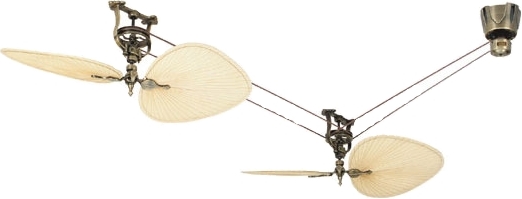
Perhaps this will be the future of the facilitation industry. Instead of facilitation performed by a central pool of experts, facilitation will be integrated permanently into every group. (Of course, this is already true to some degree, since many facilitators are members of the team or group rather than central-pool specialists.) If so, then there might be more demand for training in collaboration and facilitation than for facilitating meetings.

The Whitworth Lesson. Another possible lesson from industry can be taken from the Whitworth thread. Prior to its specification (in 1841), every industry and manufacturer had its own system of threads for screws, bolts, and nuts, and they were incompatible. That is, if your wagon was held together by bolts, and one of the bolts fell off, you had to replace it by finding a matching carriage bolt of the same manufacturer. A stove bolt simply would not do. After the Whitworth Standard was adopted, any bolt of the same Whitworth specification would do the job.

Today, we have the International Association of Facilitators’ “Certified Professional Facilitator,” Institute of Cultural Affairs’ “Certified ToP Facilitator,” International Institute for Facilitation’s “Certified Master Facilitator,” and others of various types and levels. Perhaps we have begun to standardize facilitation and the future will present us with interchangeable facilitators that reliably meet the same standards. However, there might be some undesirable consequences – reduced experimentation and innovation, greater difficulty for beginners to gain experience, disenfranchisement of those who can’t afford to become certified.

The Willys Lesson. My Father had a Jeep Station Wagon made by Willys-Overland Motors, once the second-largest American automobile manufacturer. Like many American automobile companies it was bought and sold and is no more, although its legacy lives on in the Chrysler Jeep Wrangler, Cherokee, etc. Of the more than a thousand automobile manufacturers and brands, relatively few exist today.

Perhaps that is what lies in the future of facilitation – more companies providing more varieties and brands of facilitation. The second edition of The Change Handbook (Holman, Devane, and Cady, 2007) describes more than 60 methods for whole system change, up from 18 in the first edition. The IAF Methods Database has 548 “methods for creating, leading and following up group meetings.” On the other hand, the Pattern Language for Group Process seeks “activities or qualities that repeat across many of those processes … commonalities that cross boundaries of method.” So perhaps over the next ten years we should be working toward a deeper understanding of the many methods, processes, tools, and techniques that will enable us to organize them in a coherent and parsimonious framework.

The Definition Lesson. Industry has difficulty agreeing on definitions, everything from “safe and effective” to “energy efficient” and “organic.” Wikipedia has a “disambiguation” page for facilitation that differentiates how the term is used in business, neuroscience, ecology, psychotherapy, education, adoptions, communication disorders, and illegal human trafficking. “Facilitation” can be an ambiguous term, “group facilitation” perhaps less so, but even this term can carry different meanings.

Perhaps in the future we will share the same distinctions between facilitation of group learning, decision making, and development, and between support groups, focus groups, and work groups. Or perhaps we will find another word or phrase to describe what we do or squeeze video-clip explanations on the backs of our holographic business cards.

I think I have pushed the “what can we learn from industry” metaphor far enough for now.

Sunday, May 29, 2011

My Commencement Speech at Mentor University

I heard a number of commencement speeches this graduation season, some good and some – well – they should have been shorter. Reflecting on them I wondered, what makes a good commencement speech, and what would I say if I were asked to be a commencement speaker?

Below is my response, in the form of my speech to the 2011 graduating class at Mentor University. Mentor University is not at real university, but that’s OK, because this isn’t a real commencement speech.

I rise to the podium and proceed as follows:

A good commencement speech should be:

  • Wise – providing useful advice and insights into the future;
  • Entertaining – to amuse the spirits of graduates, family, and friends; and
  • Short – it's hot, it’s stuffy, there is impending rain, and all anyone really wants is to see their graduate get his or her diploma and then go out to eat.
While I aspire to be wise and entertaining, my children have advised me to be short. As I heard Dean Frank Thompson say, “There is no such thing as a bad, short speech.” So I have three things I want to say.
  1. Keep learning
  2. Appreciate feedback
  3. Ask good questions

Here’s the first: Keep Learning.

Now that your schooling is completed, you are prepared to learn. When you learned to drive a car, you first obtained a learner’s permit and then a driver’s license. But the real development of your driving skills, the continuing process of mastering those skills, began after you received that license. So it is with the diploma you receive today – treat it as a license to learn.

To stretch this analogy further, you did not learn to drive alone. At first you had a teacher, but then, license in hand, you were alone behind the wheel. You learned from other drivers. You learned habits from them – ways of interacting – safe and courteous habits, we hope, but also perhaps, ones less so. So too in the world of work. You will learn from others. Be conscious of what you learn and whose habits you acquire. Learn what is right and good.

Here’s the second: Appreciate Feedback.

At the foundation of your continuing education and personal growth is the feedback – positive and negative – that you can receive from those who are close to you. Encourage and benefit from it. Think of it this way – if I hadn't asked my kids for feedback on this presentation, you'd be hearing a longer speech.

And the third: Ask Good Questions.

Whether at a job interview, on the job, or in a meeting, ask good questions. The key to asking good questions is listening. Listen to what others say, and ask about what they meant; clarify before you evaluate. As Moses Maimonides said, “Teach your tongue to say ‘I do not understand.’” People learn more about you from the questions you ask than from the answers you give.

I said I would say three things. I said them. I'm done.

The audience bursts into delighted and rambunctious applause.